It's a reasonable question for anyone optimizing a site's search presence: does having a proper favicon actually help SEO? The honest, precise answer is nuanced — it's not a direct ranking factor, but it isn't entirely irrelevant either.
Favicons are not a direct ranking factor
To be clear upfront: having or not having a favicon does not directly influence where a page ranks in search results. Google's ranking algorithms weigh factors like content quality, relevance, site authority, and technical performance — a favicon's presence or absence isn't among the documented direct ranking signals.
Where favicons do have a real, if indirect, effect
Google displays a site's favicon next to search results on mobile devices, a feature introduced specifically to help users visually distinguish between results and better recognize familiar or trusted sources at a glance. This creates a real, if indirect, effect: a distinctive, professional-looking favicon can plausibly influence whether someone chooses to click a result among a page of otherwise similar listings — a click-through rate effect, not a ranking effect, though click-through behavior can itself feed back into ranking signals in various indirect ways.
Google's specific favicon requirements for search display
For Google to reliably display a site's favicon in search results, the site generally needs a properly configured, square favicon meeting Google's documented size and format guidelines — details that occasionally change, so checking Google's current Search Central documentation is worthwhile if a favicon isn't appearing in search results despite being correctly set up on the site itself.
A missing or broken favicon as a quality signal
While not a direct ranking factor, sites without basic technical polish — including a missing favicon — sometimes correlate with lower overall site quality in a general sense, since favicon setup is one of many small technical details a well-maintained, professionally built site typically gets right. This is a correlation rather than a direct causal SEO effect, but it's part of why favicon setup often shows up on general website audit and technical SEO checklists.
Favicons and browser bookmark/tab behavior indirectly support engagement
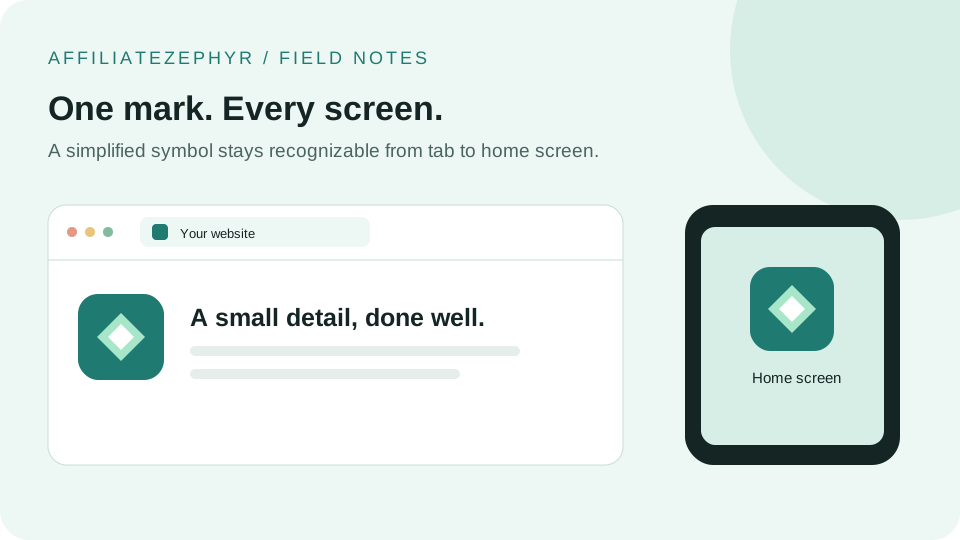
A recognizable favicon makes it easier for a returning visitor to find a previously bookmarked or open tab for your site — a small usability benefit that can support repeat visits and engagement, factors that plausibly have some indirect relationship with broader site performance metrics search engines do consider, though this is a fairly indirect chain of reasoning rather than a documented direct effect.
The practical takeaway
Don't expect a favicon to move rankings on its own — that's not how it works, and treating it as a significant SEO lever would be a misallocation of effort compared to actual content and technical SEO work. Do set one up properly anyway, since it supports search result appearance on mobile, general site professionalism, and user experience, all of which are worth getting right independent of any direct ranking impact.
Set yours up properly
Our free Favicon Generator creates a complete, properly-sized favicon set in the standard formats search engines and browsers expect, in case this has been sitting on a to-do list.
Keep reading: